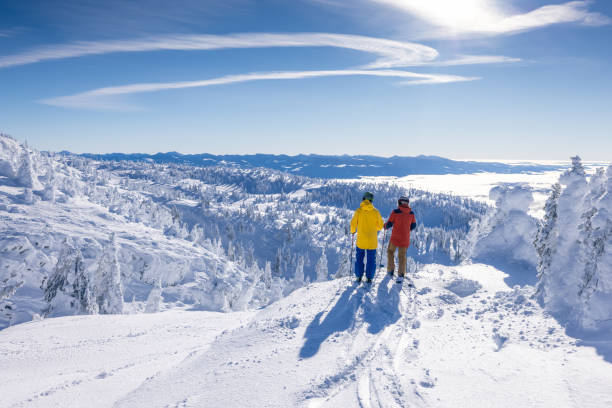

In the world of skiing, top Big Mountain Skiers are those skilled skiers who can conquer steep ridges, leap off cliffs, and effortlessly carve lines on the edge of avalanche zones. This type of skiing not only demands precise technique but also represents an extreme challenge to both the body and mind. For the average skier, the dream of conquering Big Mountain Skiing is almost irresistible. We often focus on improving our skiing skills, pursuing higher jumps, and practicing the stability of our turns, believing that as long as we ski well enough, we can conquer any mountain.
However, true off-piste skiing masters—those skiers who dare to speed through deep snow, blizzards, and complex terrain—have long surpassed this level. They understand that skiing is far more than just a matter of technique. Skiing well is not enough to guarantee your safety and freedom in the mountains. Before becoming a top skier, they are first and foremost alpinists. Because skiing is not merely a dance on the snow; the terrain, rocks, and ravines beneath the snow are the “skeleton” that determines life and death.
Bones Beneath the Snow: Hidden Dangers in Mountainous Terrain
For top skiers, snow is merely the “skin” covering the Earth’s surface. While it may appear smooth and even, beneath the snow lies an extremely complex and dangerous terrain: rocks, ravines, and ridges. Only by understanding the “skeleton” of this terrain can one truly understand the “skin” of the snow—the ski runs.
If you can’t see through the rocks, avalanche zones, and hidden traps beneath the snow, you can’t judge the stability and safety of the snow. Therefore, top alpine skiers must possess strong mountaineering skills and the ability to read mountain terrain.
Summer “X-ray” training: Viewing winter storms from a bare mountain ridge.
Why do top skiers always choose to climb the mountains they skied in winter during the summer, outside of winter? The answer is: the mountains reveal their true colors in summer. As the winter snow melts, the seemingly smooth slopes expose jagged rocks and complex gullies. This is the best time for training—the terrain structure beneath the snow layer is clearly visible.
1. Snow Accumulation Forecast: Determining the direction of snow accumulation in winter.
When mountaineers walk on bare ridges, they are not merely “hiking,” but rather interpreting the language of the mountains with every step. By observing the exposed weathered rock surfaces and the direction of the ridge, mountaineers can predict the course of winter snow accumulation, thus knowing where potentially deadly avalanche zones, wind slabs, or cornices might form. This ability helps them avoid entering dangerous snow-covered areas while skiing.
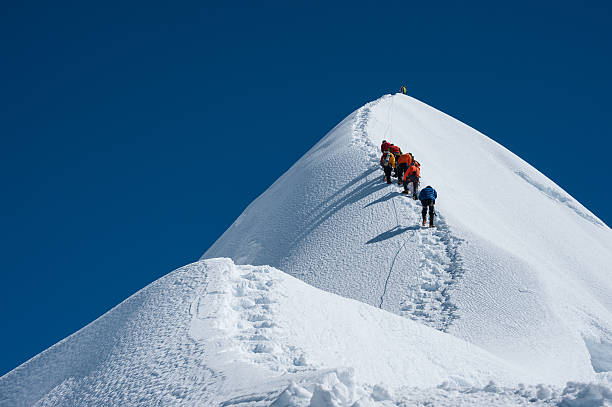
2. Anchor point memory: Accurate positioning in low visibility conditions.
Rock climbers possess a natural sensitivity to cracks and protrusions in rocks. This memory and understanding of geological structures allows climbers to pinpoint their location even in the snow-covered landscape of the winter, when visibility is extremely low, by using a few exposed rocks as markers. This ability is especially important for skiers, as rocks and gullies beneath the snow can be deadly “terrain traps.”
3. Route planning: Combining upward and downward perspectives
When skiing, skiers typically look down to find a suitable route. Mountaineers, on the other hand, typically look up to meticulously observe every inch of the terrain. In top-level alpine skiing, successful route planning often requires a combination of these two perspectives. During a climb, mountaineers notice minute changes in slope, every small crack or protrusion—these subtle topographical variations often determine whether a skier can safely traverse a particular area.
4. Sensitivity to micro-topography: Avoiding “terrain traps”
Top skiers must possess an exceptional sensitivity to micro-topography when navigating complex terrain. It is through summer hiking or climbing that they develop this sensitivity to terrain details, enabling them to avoid seemingly flat gullies and understand that they can become deadly funnels during avalanches—these “terrain traps” that are almost invisible during the snow season and can only be predicted and avoided by experienced skiers.
More than just technique: the mountaineer’s mindset
Becoming a top skier is not just about possessing exceptional skiing skills. More importantly, it’s about having a mountaineer’s mindset . This mindset helps skiers make calm judgments in complex environments and adjust their plans accordingly. Skiers must not only understand how to “ski,” but also how to “read” the snow, extracting potential dangers and challenges from changes in the terrain.
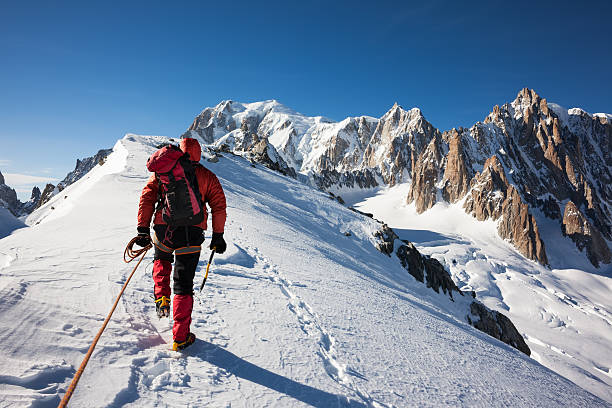
1. Comprehensive thinking: Combining different perspectives
When mountaineers plan routes, they must consider not only the overall structure of the mountain range but also the local microclimate and terrain. Skiers, on the other hand, need a higher level of thinking to translate this terrain awareness into actual route selection. In a pristine white world, choosing the right route can often prevent the most fatal risks.
2. How to understand the “temperament” of snow-capped mountains?
A snow-capped mountain is like a breathing giant, its temperament unpredictable. Summer “X-ray” training helps skiers better understand the mountain’s structure, recognizing its “skeleton.” When you understand the mountain’s temperament, returning to the snow-capped mountains in winter, you will no longer be just a technical skier, but a true master who knows how to “dance with the mountain.”
Conclusion: Respect for the skeleton is essential for better gliding.
If you want to ski longer and more skillfully in the wild, skiing technique alone isn’t enough. Outside of the snow season, you need to switch to hiking boots, pick up an ice axe, and delve into the exposed granite and feel the steep ridges. Through mountaineering, you learn the “skeleton” of the mountains—only when you understand their structure and their nature will you ski more intelligently when you return to the snow season.
No longer just pursuing the softness of powder snow, but learning how to move in harmony with the skeleton of the mountain, understanding the hidden power of every rock. At that time, your skiing skills will become more mature, and your relationship with the mountains will no longer be a simple conquest, but a profound dialogue.
Safety note: This article is for general information only. It is not medical, training, emergency, survival, or professional safety advice. Conditions, equipment needs, and personal health factors vary, so check current local guidance and consult qualified professionals before acting.


