
Whenever spring slowly approaches Northern Europe and the sun shines obliquely on the continuous mountains of Norway, there are always some people who, as if awakened by some ancient call, feel an itchy sensation on the soles of their feet – yes, it’s time to hit the ski slopes again.
But in the end, this is more than just a sport. It is more like a return to a sense of ritual , a collective memory that grows from the bones. It is no exaggeration to say that for Norwegians, skiing can be regarded as part of their DNA.
Have you ever heard the old Norwegian saying? “Norwegians are born with skis on their feet.” It sounds like a joke, but it’s no joke.
From the beginning, skiing was not romantic here. It was originally a tool for survival – climbing mountains and chasing deer, hunting, all with those two boards. But time quietly covered the initial suffering like snow, leaving behind a national sport that everyone in the country enjoys. From towns to fjords, from children to elders, almost everyone will “disappear” in the snow in winter.
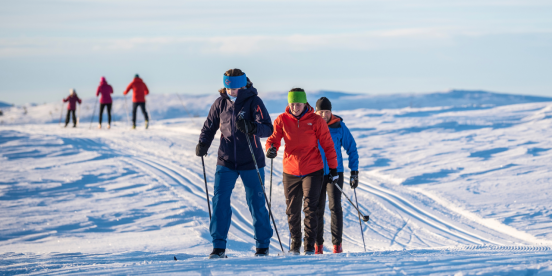
Cross-country skiing? Needless to say, it is Norway’s national sport. When the snow season comes, the whole country seems to be on the same page. Skiing has become a weekend staple, a social bonding activity, and even a lubricant in parent-child relationships.
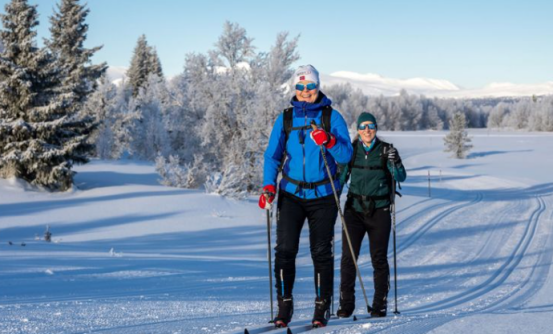
However, the most interesting moment is not the beginning of the snow season, but the ending.
Do you think that everyone packs up their boards and goes home when spring comes? You are totally wrong. In Norway, the end of the snow season becomes the highlight of the festival . What you can see is not a reluctant farewell, but various ski parties, mountain concerts, and people dancing in retro ski clothes. The sun is no longer as fierce as in winter, and the snow melts slowly. The whole valley looks like a farewell party before a long farewell.
There is more than one way to ski –
Do you like the thrill of alpine skiing? Yes.
Do you prefer to walk quietly on the snow on the forest trails? Of course.
Norwegians even play kite skiing, using a kite to drag people across the endless white snow, which sounds wild enough.
There are also those travelers who don’t ski, who set up their cameras beside the ski slopes, which has also become part of the scenery here.
When it comes to international competitions, we can’t help but mention their piles of medals. Since 1924, Norway has regarded the Winter Olympics as an extension of a national ritual. No matter which edition, Norwegian skiers are always like elves on the snow, and their appearance makes the world shine. Even if they fail like in Sochi in 2014 (the “ski wax incident” that year was quite embarrassing), they still bounce back in the next edition, almost as if they have some kind of immortal contract with winter.
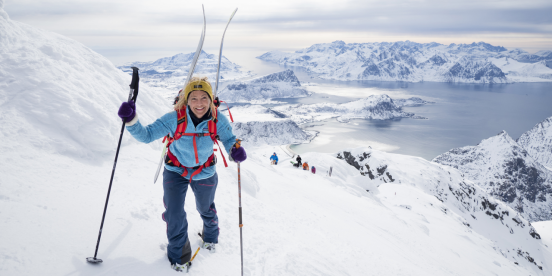
But what is truly fascinating are the cultural details behind skiing that are rarely noticed by tourists .
For example, when you are tired of skiing in a cabin in the mountains, you can drink a glass of warm wine; or you may come across a bowl of bubbling venison soup in a rural town; or you may simply walk alone in the snow and hear someone not far away telling ancient Norse mythology – about Thor, the god of thunder, and about the origin of the Aurora.
These things are not in the travel brochures, but when you leave, you feel like you have stepped out of a real epic.
For Norwegians, skiing is not just a sport, entertainment, or a vacation activity. It is more like a deep spiritual mechanism : the winter is too long, the days are too short, and the warmth between people is sometimes maintained by a pause, a look back, or a laugh while skiing.
They seldom say skiing is “romantic”, but in this expanse of white snow, there is a quiet feeling flowing – you will see three generations of a family skiing together on a slope, and you will also see young people driving with their friends to a ski resort far away from the crowd to camp, just to see a pink evening snow scattered across the canyon at sunset.
Nowadays, Norwegians are increasingly concerned about the sustainability behind skiing . Many remote ski communities rely on winter tourists for their livelihoods, so people are encouraged to choose local cabins, eat local food, and support local guides and coaches. This is both cultural protection and natural protection.
In the end, if you come to Norway and just slide back and forth on the snow track a few times, take some photos and leave, you may have missed its true soul.
Because here, every piece of snow is not blank, but a rhythm of life passed down from generation to generation.
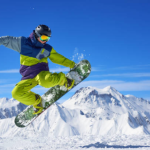
The moment you put down your snowboard, you are actually in sync with the memory of an entire nation.
Safety note: This article is for general information only. It is not medical, training, emergency, survival, or professional safety advice. Conditions, equipment needs, and personal health factors vary, so check current local guidance and consult qualified professionals before acting.