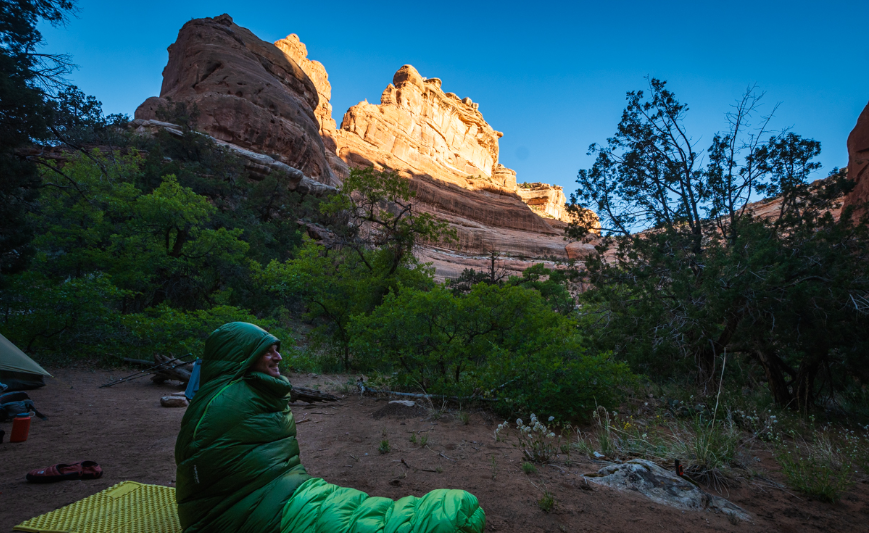

Understanding Thermal Regulation and Sleeping Bag Physics
Staying warm in a sleeping bag is not merely about the bag’s temperature rating; it is about managing the micro-climate between your body and the environment. Your body acts as a furnace, and the sleeping bag serves as the insulation that prevents convective and conductive heat loss.
The Principles of Loft and Insulation
Insulation works by trapping dead air. Whether your bag uses down or synthetic fill, the “loft” or fluffiness of the material is what retains warmth. If the fill is compressed, it loses its ability to trap heat effectively.

Strategic Layering for Maximum Heat Retention
What you wear inside your bag is just as important as the bag itself. Many campers make the mistake of wearing too many layers, which can actually compress the insulation and restrict blood flow.
The Base Layer Philosophy
Use moisture-wicking synthetic or merino wool base layers. Avoid cotton at all costs, as it retains moisture and leaches heat away from your body. A dry, clean set of thermals specifically reserved for sleeping is a game-changer.

Optimizing Your Sleeping Pad and Ground Insulation
You can lose more heat to the cold ground via conduction than you do to the air via convection. A sleeping bag only insulates the top and sides; the weight of your body compresses the bottom insulation, rendering it nearly useless.
R-Value Explained
The R-value measures a pad’s resistance to heat flow. For winter camping, an R-value of 4.0 or higher is recommended to create a sufficient thermal barrier between you and the frozen earth.

Pro Tips for Environmental and Internal Heat Management
Beyond gear, your physiological preparation and campsite setup play pivotal roles in your comfort.
- Eat a high-fat snack before bed to keep your metabolism burning through the night.
- Fill a leak-proof water bottle with hot water and place it inside the bag near your core.
- Use a sleeping bag liner to add 5-10 degrees of extra warmth.
- Never breathe inside your bag; the moisture from your breath will dampen the insulation.

Comparison of Sleeping Bag Insulation Types
| Feature | Down Insulation | Synthetic Insulation |
|---|---|---|
| Warmth-to-Weight | Excellent | Moderate |
| Moisture Resistance | Poor (unless treated) | Excellent |
| Compressibility | High | Low |
| Cost | High | Budget-Friendly |

Frequently Asked Questions (FAQ)
- Should I wear a hat while sleeping?
- Yes, wearing a dry beanie helps prevent heat loss through the head, which is one of the most effective ways to regulate core temperature.
- Why do I feel cold even in a 0-degree bag?
- This is often due to an inadequate sleeping pad, damp base layers, or not consuming enough calories before sleep to fuel your metabolic heat production.
- Is it better to sleep naked?
- Contrary to popular belief, wearing dry, loose-fitting moisture-wicking layers is warmer than sleeping naked, as it traps air and prevents skin-to-bag heat loss.
- How do I dry out a damp sleeping bag in the field?
- Ventilate it in the sun if possible, or shake it out thoroughly to restore loft. Avoid placing it too close to an open fire, as synthetic materials melt easily.


