
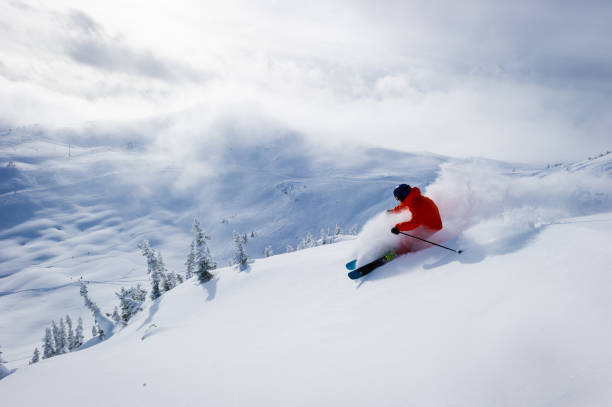
Extreme skiing is a perfect blend of speed and freedom, and a test of the mind. Every steep descent and every high-speed turn in the snowy landscape challenges the athlete’s mindset and reflexes. To master this white world, physical skill alone isn’t enough; mental training is equally crucial. It allows you to remain calm in the face of fear, make quick decisions in challenging snow conditions, and truly make skiing a pleasure, not a dreadful experience.
Understanding Fear: Let Fear Become a Protection Rather Than an Obstacle
Fear is a natural response to the snowy environment, alerting you to potential risks. Beginners often become nervous due to the steepness of the slopes or the speed of the terrain. Suppressing this fear only increases the chance of error. An effective approach is to learn to identify the source of fear, accept it, and gradually challenge yourself. For example, start with easier slopes, gradually increasing the slope and speed to allow both your body and mind to adapt. With experience, fear will become a force of caution rather than an obstacle to action.
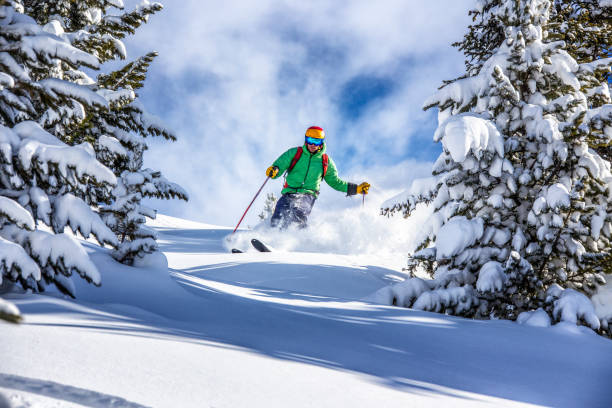
Focus on the present moment: Concentration is the cornerstone of safety and performance
High-speed skiing and the ever-changing snow conditions demand intense focus. Distraction not only impairs performance but also increases the risk of accidents. Focus training involves breathing regulation, visual focus, and mental rehearsal. Deep breathing helps control heart rate and focus attention on movement and the environment; visual training helps quickly identify obstacles and routes; and mentally rehearses movements in various snow conditions. With long-term practice, focus becomes a natural part of skiing, making movements more fluid and significantly reducing fear.
Reaction ability: coordinated training of mind and body
Your reflexes determine your performance in unpredictable snow conditions. High-speed descents or challenging terrain require your body to react quickly and precisely. Training methods include balance and core exercises, as well as decision-making exercises that simulate changing snow conditions. Balance training improves stability, core training strengthens control of movement, and randomized practice enhances quick decision-making under pressure. As your reflexes improve, you’ll find yourself staying calm even at high speeds, able to react flexibly to unexpected situations, and turning your mental advantage into action.
Mental resilience: Recovering quickly from failure
Falls and failures are inevitable in extreme skiing, but mental resilience allows athletes to quickly adjust. The key to building resilience is accepting mistakes, viewing each stumble as a learning experience rather than a failure, and using positive self-talk to maintain confidence. Recovery training should be gradual, starting with easier movements to rebuild a rhythm and then gradually moving on to more challenging slopes. Mental resilience not only helps athletes overcome anxiety but also allows the body to gradually adapt to high-pressure environments through repeated challenges.
Comprehensive mentality: synchronizing mental training with skiing
Mastering your snowy mindset is a comprehensive skill that integrates fear management, focus, reflexes, and resilience. Through mental training, you can not only glide effortlessly down the slopes, but also savor the thrill and freedom of the challenge. The true allure of extreme skiing lies not only in speed and technique, but also in the calmness and control of your mindset. Every descent is not just a release of speed, but also an experience and test of your mental strength.
Safety note: This article is for general information only. It is not medical, training, emergency, survival, or professional safety advice. Conditions, equipment needs, and personal health factors vary, so check current local guidance and consult qualified professionals before acting.