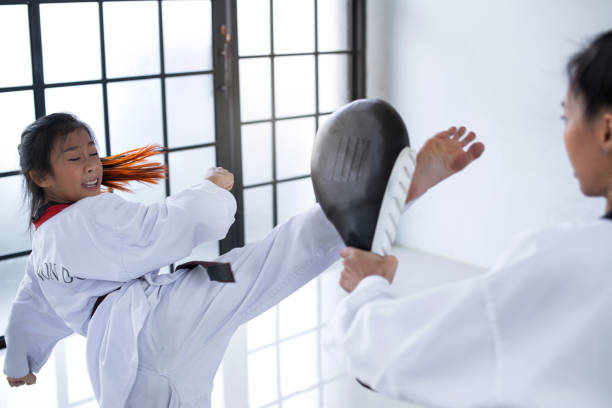

Welcome to the ultimate guide for martial artists seeking to elevate their technical proficiency. In the world of combat sports, success is not merely a product of raw strength but a deep understanding of mechanics, timing, and strategy. This pillar page synthesizes expert knowledge on a wide array of essential skills, from generating explosive punching speed and mastering devastating kicks to executing flawless defensive maneuvers and escaping dangerous submissions. Whether you are a beginner building your foundation or an experienced practitioner refining your art, this compendium provides the detailed breakdowns and training methodologies necessary for true mastery.
Foundational Striking Mechanics: Mastering Power and Speed
The core of any striking art lies in the ability to deliver fast, powerful, and accurate blows. This requires moving beyond the brute-force mentality and embracing the science of biomechanics. Speed and power are not mutually exclusive; they are two sides of the same coin, forged through technique, relaxation, and intelligent training. The heavy bag, or sandbag, serves as an indispensable tool in this journey, testing not only your physical form but also your mental fortitude.
The Science of Punching Faster: It’s Not About Muscle
The quest for a faster punch is often misunderstood as a need for bigger muscles. In reality, the key to speed is relaxation and efficiency. Tense muscles are slow muscles. A relaxed state allows for rapid acceleration, with tension only applied at the final moment of impact. This principle minimizes telegraphing your movements to an opponent and conserves energy, allowing you to maintain speed throughout a match. The goal is to be loose and fluid during the motion and snap into a tight, solid structure upon contact.
The Role of the Kinetic Chain in Power Generation
True striking power originates from the ground up. It is a full-body movement that transfers energy through a sequence known as the kinetic chain. This process begins with your feet pushing against the floor, generating rotational force through your hips and torso, which then travels up through your shoulder and finally accelerates your arm and fist toward the target. Each link in this chain must be strong and coordinated to maximize the force delivered. A breakdown anywhere—improper foot placement, a stiff torso, or a disconnected arm—will significantly bleed power from your strike.
Using the Sandbag to Refine Technique and Build Willpower
The sandbag is more than just a target for building power; it’s a diagnostic tool. Every impact provides immediate feedback on your technique. A solid, resounding “thud” indicates proper alignment and force transfer, while a glancing or weak sound signals a flaw in your mechanics. Consistent sandbag training helps in several ways:
- Technique Refinement: It allows you to drill the kinetic chain repeatedly, turning a conscious sequence of movements into an unconscious, explosive reflex.
- Impact Conditioning: It strengthens the bones, tendons, and ligaments in your hands and wrists, reducing the risk of injury.
- Endurance and Willpower: Pushing through long rounds on the heavy bag builds cardiovascular and muscular endurance. More importantly, it forges mental toughness, teaching you to maintain form and power even when fatigued.

The Art of Offensive Variety: Uppercuts and Sweep Kicks
Predictable attacks are easily countered. To be an effective striker, you must possess a diverse arsenal of offensive tools that can attack from different angles and target different levels. The uppercut and the sweep kick are two powerful, yet often underutilized, techniques that can break an opponent’s defense and create significant openings. Mastering them requires a detailed understanding of their unique mechanics.
Deconstructing the Perfect Uppercut: From Feet to Fist
The uppercut is a devastating close-range weapon that travels vertically, bypassing an opponent’s conventional guard. Its power, like any punch, is generated from the ground. The execution involves a slight dip in the knees and a powerful upward drive, rotating the hips and torso to channel energy into the ascending fist. The arm should remain bent at roughly a 90-degree angle, and the punch should travel in a straight line up towards the target, typically the chin or solar plexus. The palm can face towards you or be slightly turned, depending on the range and target.
Common Uppercut Mistakes and How to Correct Them
Many fighters struggle to generate power with their uppercut or leave themselves exposed. The most common errors include:
- Arm Punching: Relying solely on the arm and shoulder muscles, which results in a weak, telegraphed punch. Correction: Focus on the leg drive and hip rotation as the primary power source.
- Swinging Wide: Looping the punch in a wide arc instead of driving it straight up. This slows the punch down and creates a massive defensive opening. Correction: Keep your elbow tucked in close to your body throughout the motion.
- Dropping the Non-Punching Hand: A natural but dangerous tendency that leaves your head unprotected. Correction: Consciously keep your defensive hand glued to your chin or temple.
Mastering the Sweep Kick: Balance, Force, and Timing
A sweep kick is a low-line attack designed to disrupt an opponent’s balance, knock their feet out from under them, or inflict damage on their legs. Effective execution hinges on three elements: a stable base, explosive force generation, and impeccable timing. The supporting leg must be slightly bent to act as a solid pivot point, while the sweeping leg accelerates through the target. The power comes from the rapid rotation of the hips, similar to a baseball bat swing. The point of impact is typically the shin or instep against the opponent’s ankle or calf.

Defensive Mastery: The Nuances of the Boxing Parry
Defense is not a passive act of survival; it is an active strategy to nullify threats and create offensive opportunities. While blocking absorbs impact, parrying is a more refined skill that redirects an opponent’s attack. A well-executed parry uses minimal energy, keeps you in position, and can instantly set up a powerful counter-attack, making it an essential tool for any high-level practitioner.
Beyond Blocking: The True Purpose of a Parry
The fundamental difference between a block and a parry is the intent. A block is a barrier meant to stop an incoming force, often resulting in both fighters absorbing some of the impact. A parry, however, is a subtle deflection. It uses the opponent’s momentum against them, guiding their punch just past its intended target. The primary goals of a parry are to make the opponent miss, unbalance them, and create an angle for an immediate counter-strike. It is a proactive, offensive form of defense.
Correct Hand Positioning and Movement
A parry is a short, sharp, and precise movement. It is not a wide slap or a push. For an incoming jab or cross, the parrying hand moves only a few inches from its guard position to meet and redirect the punch. The contact should be made with an open palm or the side of the glove. The key is to intercept the opponent’s forearm or glove early in its trajectory, before it has reached peak velocity. Over-extending your parry will pull you out of position and make you vulnerable.
Transitioning from Parry to Counter-Attack
The true beauty of the parry lies in its seamless transition to offense. By deflecting an opponent’s punch, you create a momentary opening. A successful parry should be immediately followed by a counter. For example:
- Parrying a jab with your rear hand: This immediately frees your lead hand for a counter jab or hook.
- Parrying a cross with your lead hand: This perfectly positions your rear hand to fire a counter cross directly down the newly opened lane.
Drilling these parry-counter combinations is crucial until they become a single, fluid motion.

The Dance of Combat: Advanced Footwork and Combinations
If striking and defense are the language of combat, footwork is the grammar that connects everything. Superior footwork allows you to control distance, create angles, and launch attacks while remaining defensively sound. Once you have mastered movement, you can begin to weave individual techniques into fluid, effective combinations that overwhelm your opponent.
Why Footwork is the Foundation of All Combat
Excellent footwork is non-negotiable for any serious martial artist. It governs your ability to be in the right place at the right time. Proper footwork ensures you are always balanced, whether you are attacking, defending, or moving. It allows you to manage the distance to your opponent—closing in to attack, maintaining a safe range, or evading to reset. By using lateral movement and pivots, you can create advantageous angles where you can hit your opponent, but they cannot easily hit you.
Five Core Drills to Improve Boxing Footwork
Consistent practice is the only way to develop instinctive footwork. Here are five practical drills:
- Shadow Boxing: The most fundamental drill. Move around the floor, visualizing an opponent, and practice your offensive and defensive movements.
- Jumping Rope: Develops lightness on your feet, improves coordination, and builds calf endurance.
- Line Drills: Practice moving forward, backward, and side-to-side along a straight line while maintaining your stance and balance.
- Pivoting Drills: Place an object on the floor and practice pivoting around it on the ball of your lead foot, changing your angle of attack.
- The Square Drill: Use cones to create a square and practice moving along its perimeter with proper footwork, facing forward the entire time.
The Principles of Building Smooth and Effective Combinations
A combination is more than just a random sequence of strikes. An effective combination is built on a logical foundation. The first strike often serves to create an opening or a reaction, which the subsequent strikes exploit. For example, a jab might cause an opponent to raise their guard, opening them up for a body shot. Rhythm is also key; varying the timing and power of your strikes can confuse your opponent and make your attacks harder to predict. The ultimate goal is to transition so smoothly between techniques that they flow as one continuous motion.

Grappling Escapes: Surviving the Guillotine Choke
While striking is critical, a complete martial artist must be prepared for grappling situations. The guillotine choke is a common and dangerous submission that can end a fight in seconds. It is typically applied from a front headlock position when one fighter shoots for a takedown or leaves their head exposed. Knowing how to defend and escape this choke is a vital survival skill.
Recognizing the Threat: Early-Stage Guillotine Defense
The best defense is to not get caught in the first place. When changing levels for a takedown, keep your head up and your back straight. If you feel your opponent’s arm wrap around your neck, you must react instantly. The first priority is to prevent them from securing a deep grip and connecting their hands. Use your own hand to create a frame against their hip or bicep on the choking side. This buys you precious time and space.
The Critical Importance of Posture and Creating Space
Once the choke is applied, the opponent will try to break your posture and extend your body to tighten it. Your immediate goal is to counter this by improving your posture. Get your hips underneath you and try to drive your head up towards the ceiling. This relieves some of the pressure on your carotid arteries. At the same time, you must control the opponent’s body to prevent them from adjusting. Grab their waist or hips to keep them close, which ironically makes it harder for them to finish the choke effectively.
Step-by-Step Escape Techniques from Front Headlock
If the choke is locked in, a systematic escape is required. A common and effective method is as follows:
- Address the Choke: Bring your hand on the same side as their choking arm over their shoulder and grab their wrist. Use your other hand to support that grip (a two-on-one). This prevents them from tightening the choke further.
- Control the Body: Keep your head up and pressure into them to maintain posture.
- Circle to Safety: Begin to circle your feet and body towards the side of their trapped arm. This movement changes the angle of the choke and takes the pressure off your neck.
- Pop Your Head Out: As you continue to circle, you will create a window of space. Drive your head up and out of the opening you’ve created.
This escape must be drilled repeatedly to become a reflexive action under pressure.
Frequently Asked Questions (FAQ)
- Q1: How often should I train with a sandbag to see improvement?
- For best results, incorporate sandbag or heavy bag training into your routine 2-3 times per week. Focus on quality over quantity. A session could consist of 3-5 rounds of 3 minutes each. In one session, you might focus on power; in another, on speed and combinations. Consistency is more important than intensity.
- Q2: What is the biggest mistake beginners make with footwork?
- The most common mistake is crossing the feet. When moving laterally or forward/backward, many beginners will cross one foot over the other, which completely destroys their balance and makes them extremely vulnerable to being knocked down or countered. Always maintain your stance by pushing off one foot and sliding the other.
- Q3: Can I practice parrying without a partner?
- While a partner is ideal for realistic timing, you can absolutely practice the mechanics of parrying alone. Stand in front of a mirror and shadowbox, visualizing incoming punches and executing the small, precise parrying motions. You can also use a double-end bag or a slip bag, which simulates an opponent’s jab and allows you to practice parrying a moving target.
- Q4: How do I know if my punch is getting faster?
- There are a few indicators. First, you will hear a change in the sound of your impact on a heavy bag or focus mitts—it will become a sharper “snap” rather than a dull “thud.” Second, you can film yourself in slow motion to analyze your technique and see if you are reducing unnecessary movements. Finally, experienced training partners or coaches will be able to feel the difference and provide valuable feedback.
- Q5: Why is the uppercut considered a risky punch?
- The uppercut is risky because, if thrown incorrectly, it can leave you wide open for a counter, particularly a hook. The motion of dropping your shoulder to load up the punch can expose your chin. A wide, looping uppercut is both slow and defensively irresponsible. That is why it’s crucial to throw it compactly, with power generated from the legs and hips, while keeping the non-punching hand firmly in its defensive position.
Safety note: This article is for general information only. It is not medical, training, emergency, survival, or professional safety advice. Conditions, equipment needs, and personal health factors vary, so check current local guidance and consult qualified professionals before acting.


